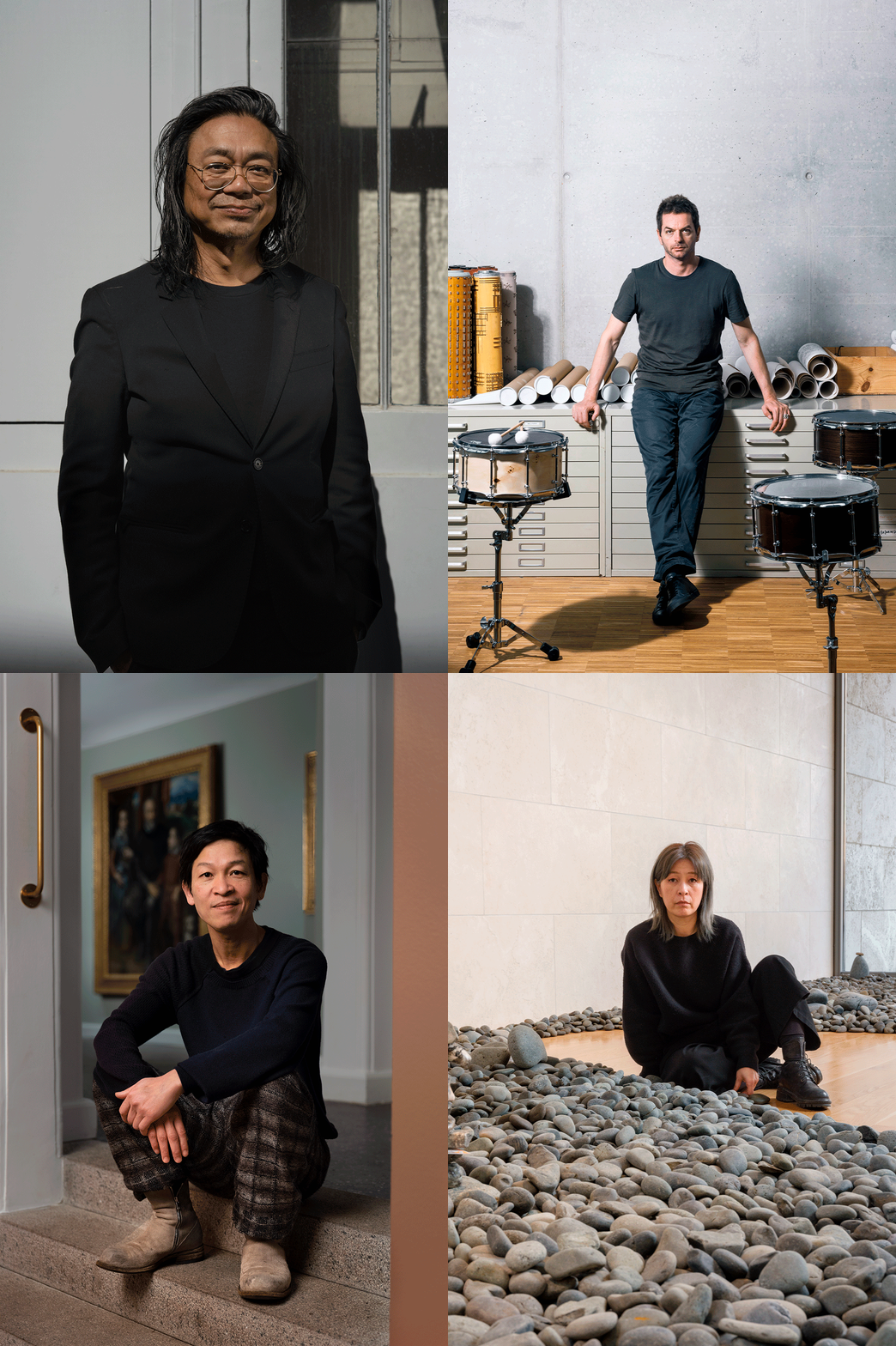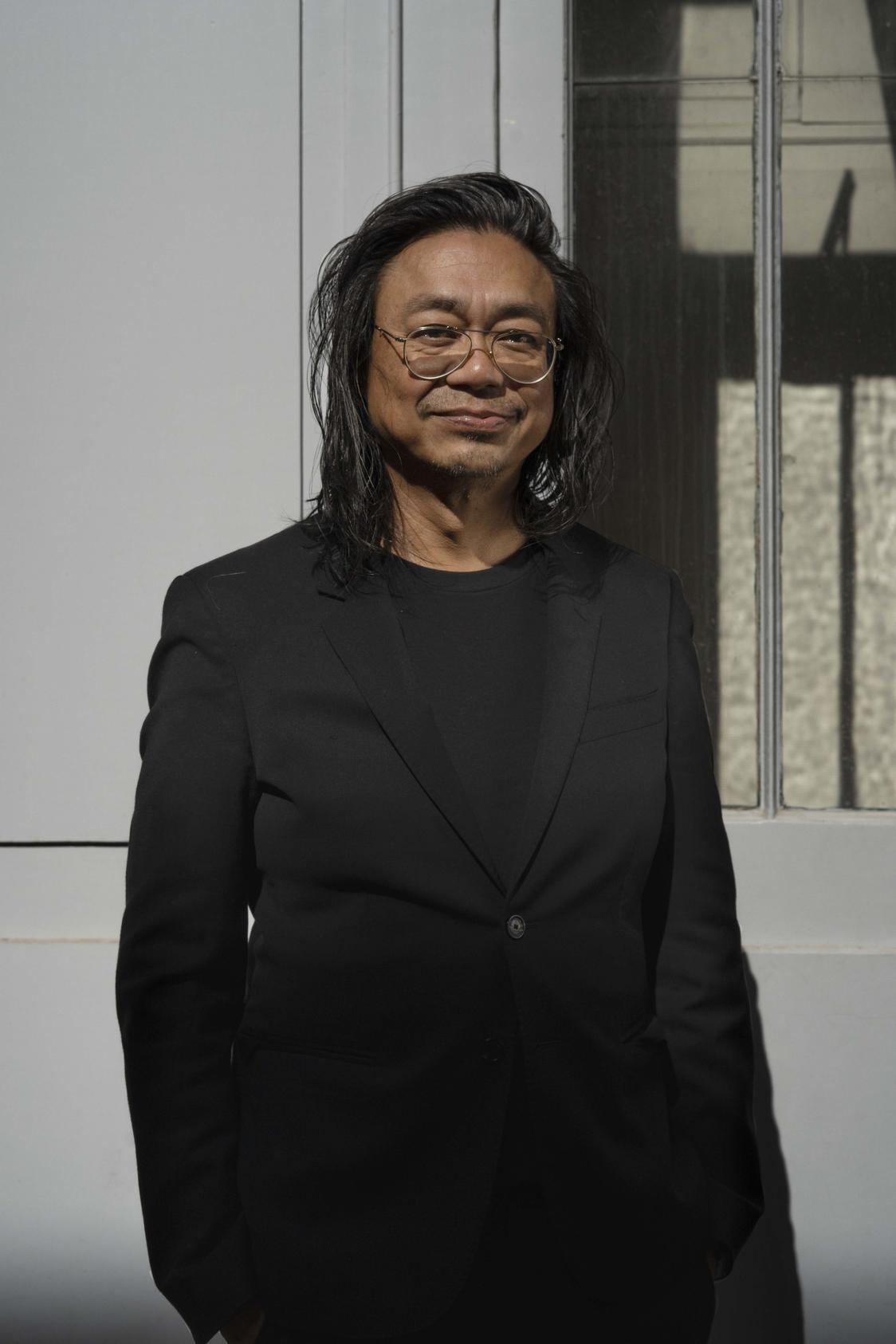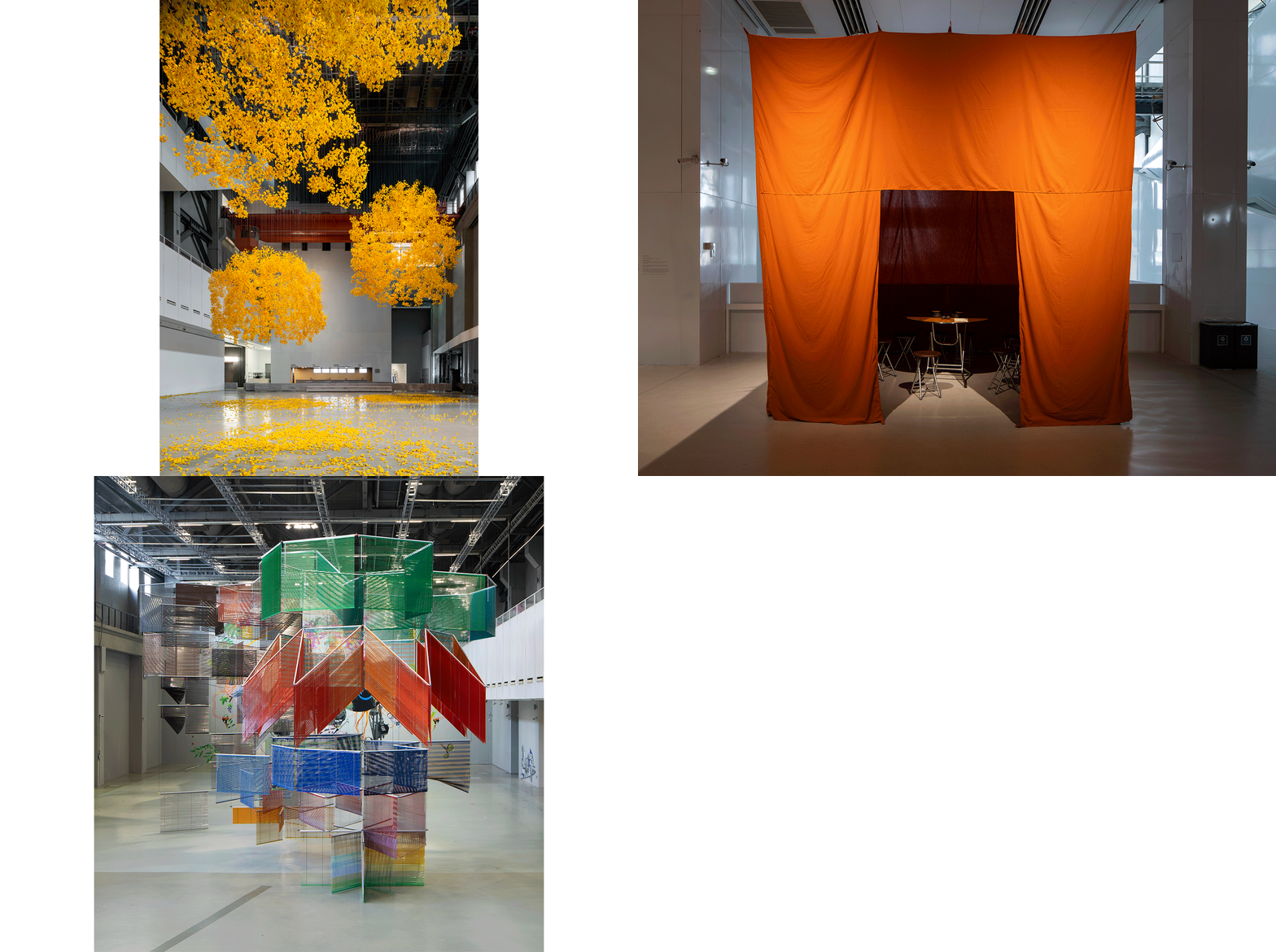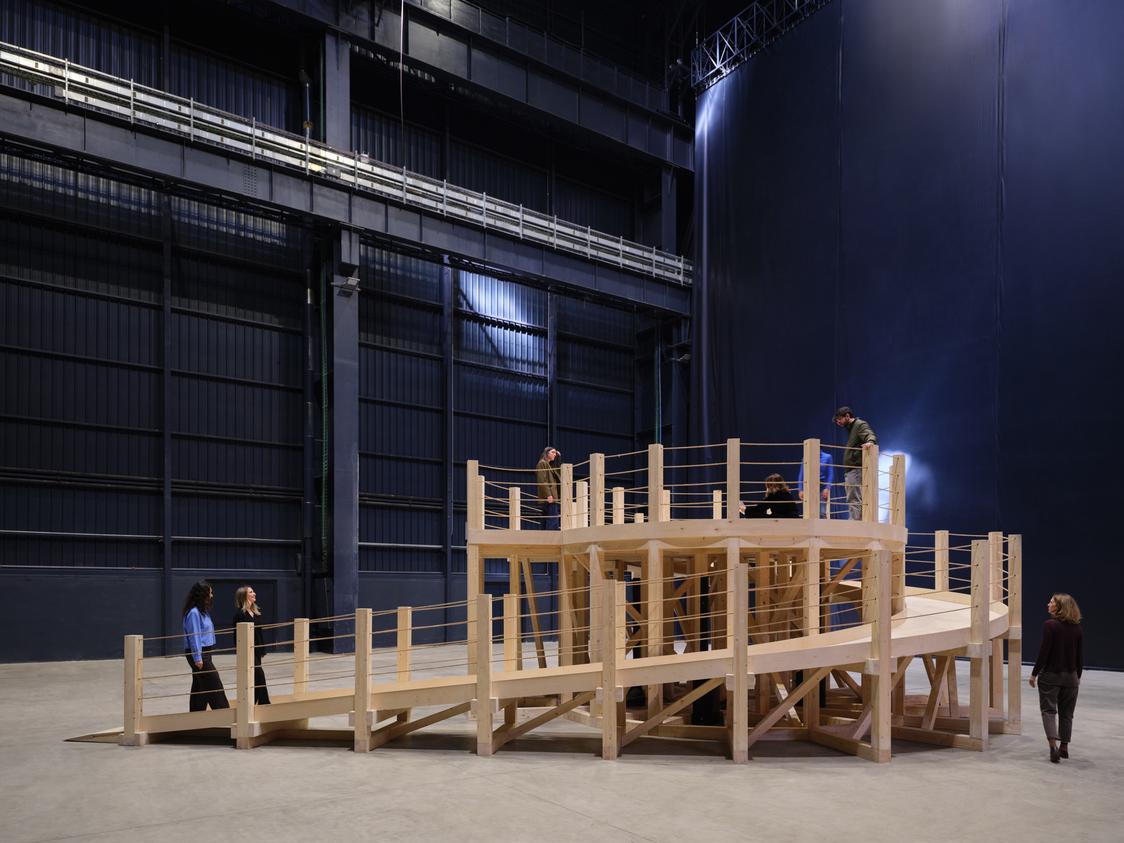
Rirkrit Tiravanija, The House That Jack Built, installation view, Pirelli HangarBicocca, Milan, Italy (2026). Photo: Agostino Osio.
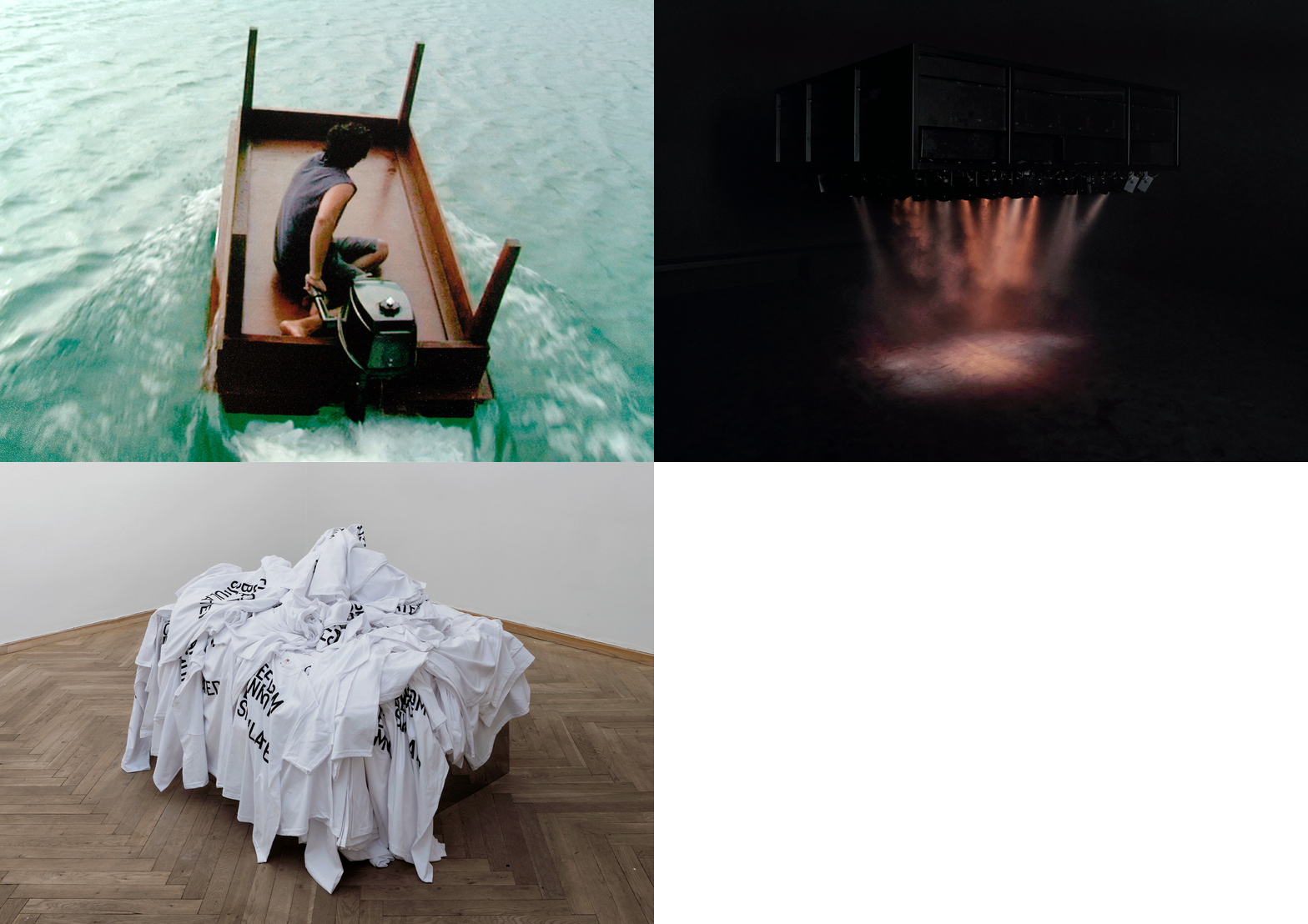
The retrospective The House That Jack Built introduces thirty years of research by Rirkrit Tiravanija addressing questions of architecture and space.
The title refers to the famous 18th-century English nursery rhyme of the same name, which has a repetitive and cumulative structure. Contrary to what the title suggests, the rhyme does not recount the story of the house or its builder. Rather, it reveals how the house is indirectly connected to, and interacts with, the people and things around it. By evoking the rhyme, Tiravanija highlights a solid relationship with issues of authorship, a prevalent theme in his work. The artist conceives buildings as platforms, whose value is determined by their use and the people who inhabit them rather than by their form.
The exhibition showcases the largest collection of the artist’s architectural works to date, many of which are inspired by iconic buildings of celebrated architects associated with Modernism, including Sigurd Lewerentz, Le Corbusier, Rudolf Michael Schindler, Frederick Kiesler, Jean Prouvé, and Philip Johnson.
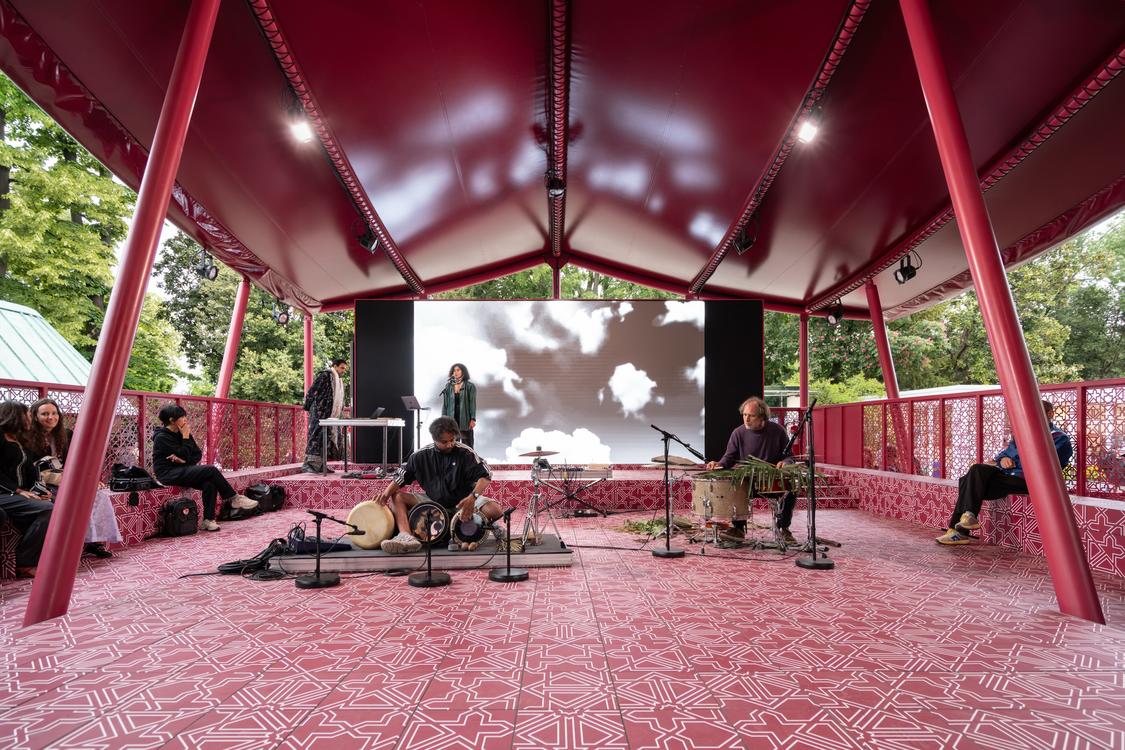
With these structures, Tiravanija explores themes related to authorship and reinterprets modernist icons by altering their original function through collective activation and placing them in radically different contexts.
This opens up new possibilities for use, relationship, and meaning. Like cinematic sequences unfolding throughout the exhibition, the show presents a succession of scenarios in which visitors become protagonists. In many installations, the words “a lot of people” appear among the listed materials. Relying on “a lot of people” to bring the work to life means embracing interruptions and unforeseen events: what happens may not match what existed up to that point. Thus, the exhibition is not intended to be a mausoleum of emblematic works from the past. Rather, it is an active, participatory format in which forms are reactivated by different presences and circumstances each time.
Learn more