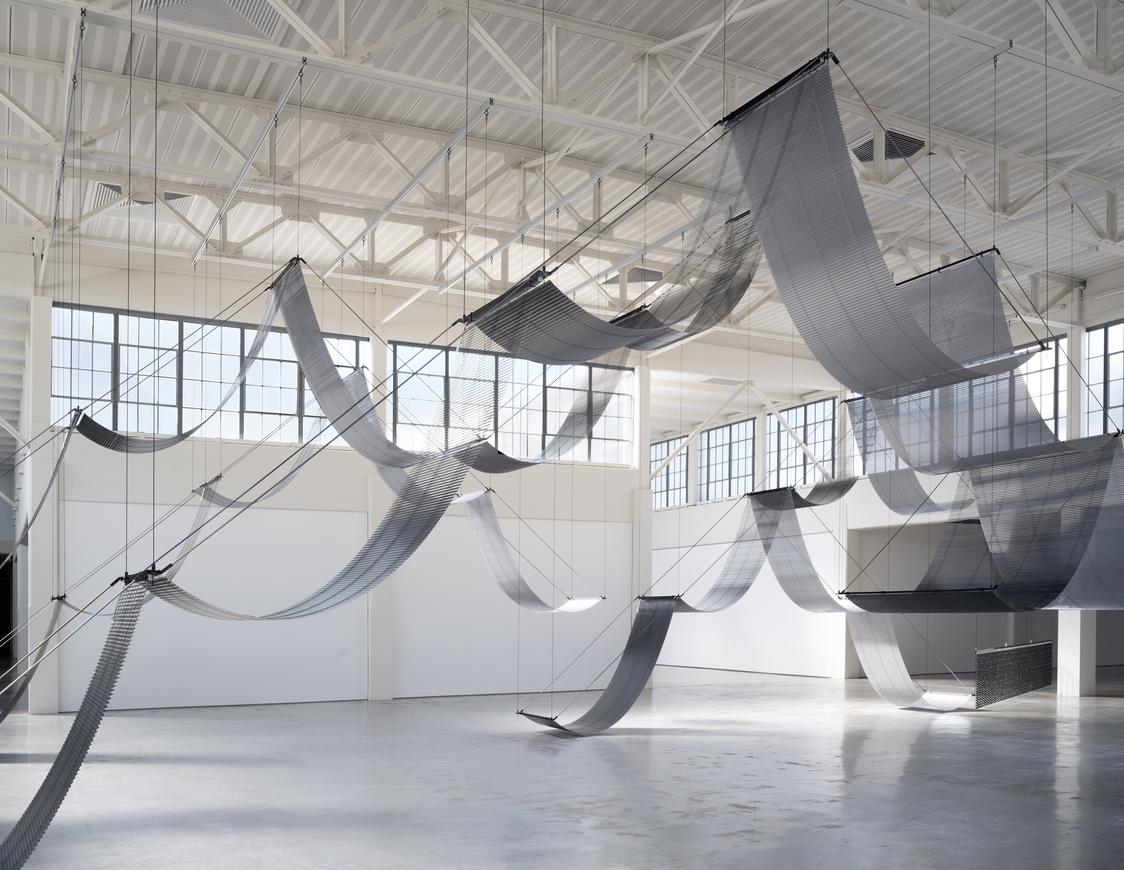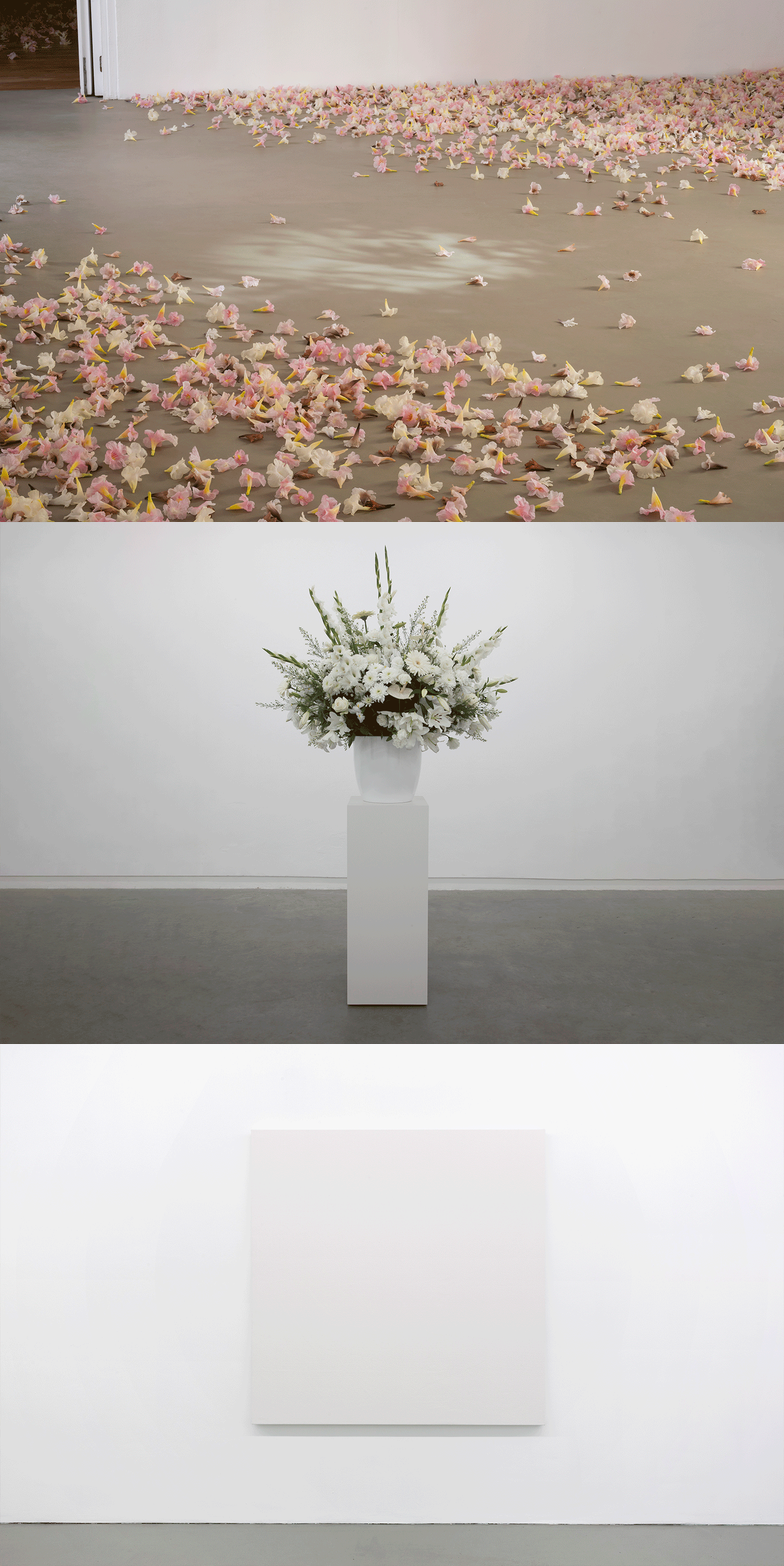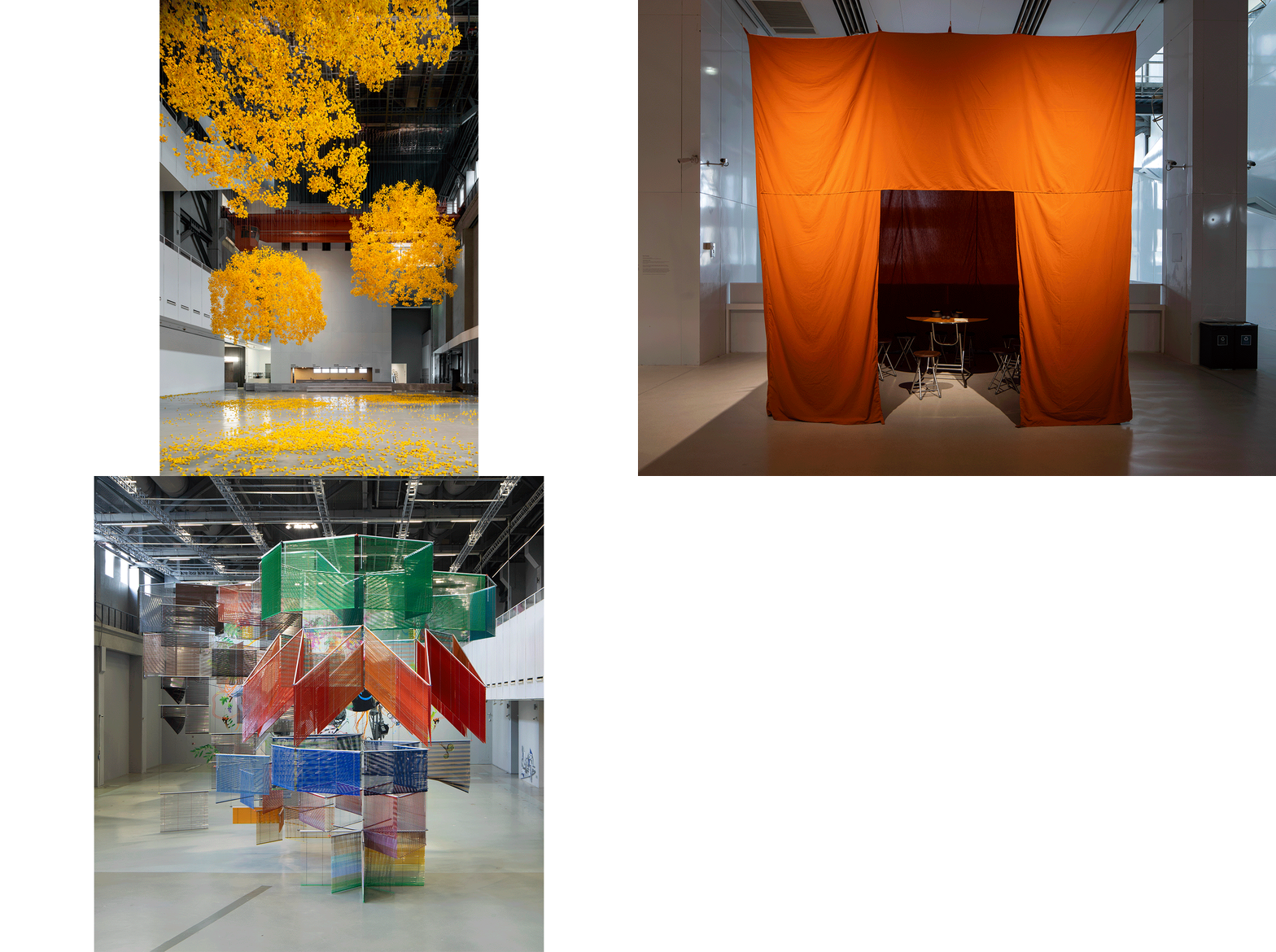
Allora & Calzadilla, Graft (Phantom Tree), 2025; Rirkrit Tiravanija, untitled 1992 (cure), 1992; Haegue Yang, Accommodating the Epic Dispersion – On Non-cathartic Volume of Dispersion, 2012, in Does the flower hear the bee?, installation views, 15th Shanghai Biennale, Shanghai, China (2025). Photos: Power Station of Art.
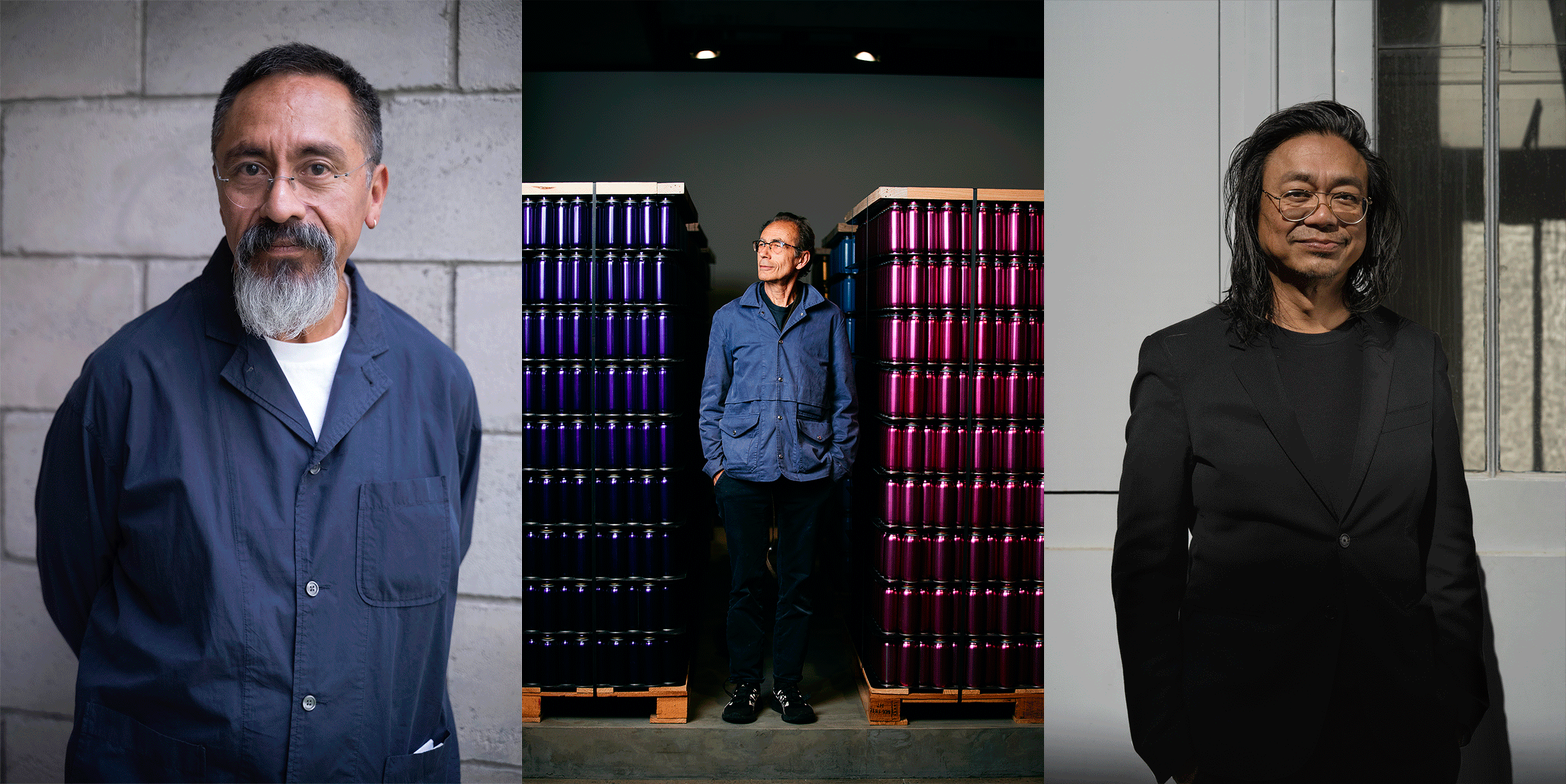
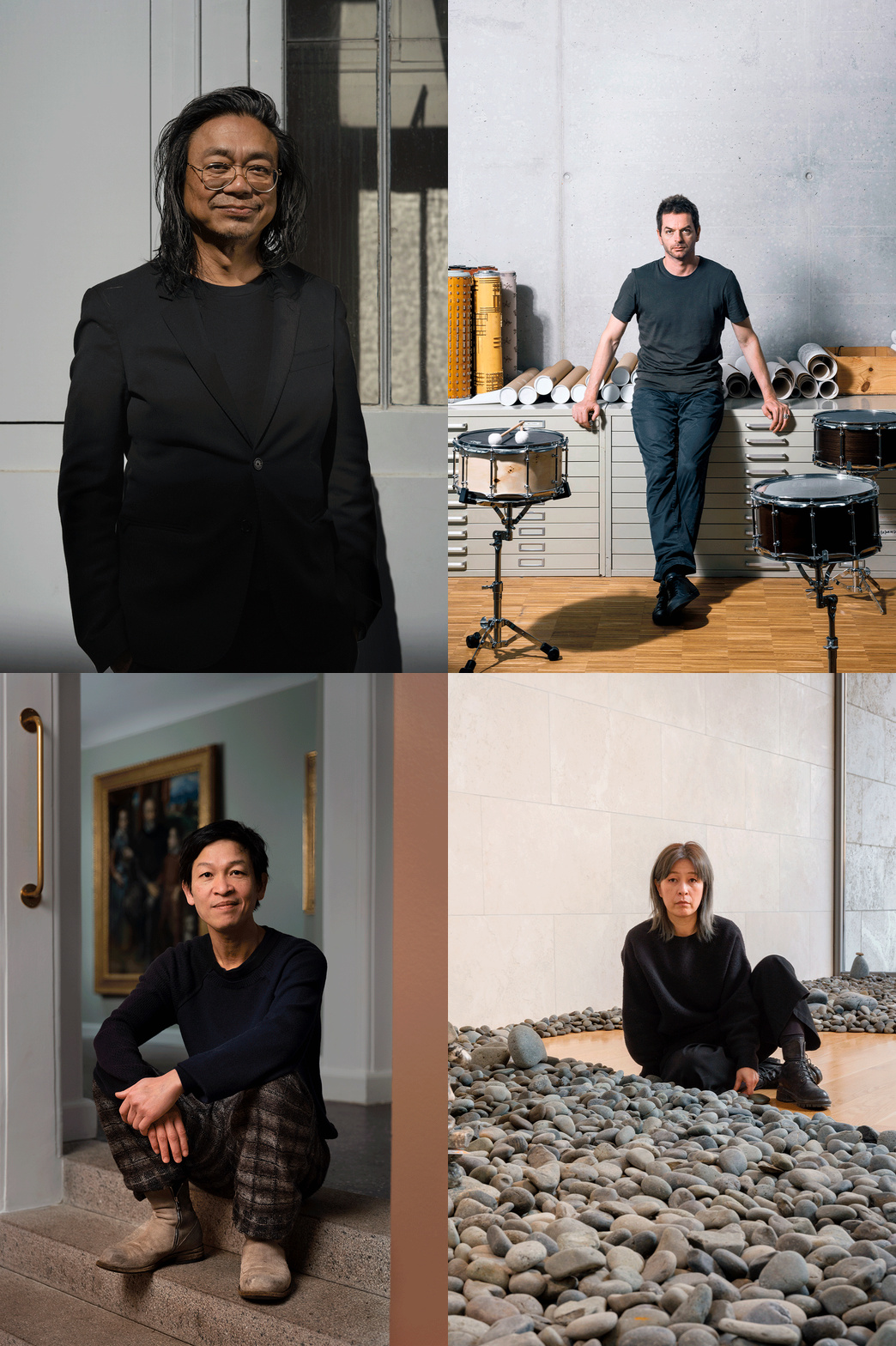
Allora & Calzadilla, Rirkrit Tiravanija, and Haegue Yang are participating in the 15th Shanghai Biennale, titled Does the flower hear the bee?.
Allora & Calzadilla present the works Penumbra (2020) and Phantom Forest (2025).
Penumbra (2020) is a landscape made of light, sound, and memory. Projected across the walls and floor of the atrium, shifting bands of light simulate the sun filtering through the forest canopy of Martinique’s Absalon Valley. The work recalls a charged moment in 1941, when Aimé and Suzanne Césaire walked these woods with exiled Surrealists fleeing Europe. Their brief encounter wove together anti-colonial thought, poetic vision, and political refuge. Rather than depicting that history, we evoke its residue. The light responds in real time to the position of the sun above Shanghai, merging two geographies into a single field of shadows. A sound composition by David Lang adds “shadow tones”—frequencies that emerge between notes, like memory surfacing from silence. Penumbra doesn’t reconstruct the past; it radiates its afterglow, suggesting that history is not fixed but diffused, refracted, and ongoing.
In Phantom Forest (2025), Allora & Calzadilla set out to create a space where absence becomes palpable. Suspended in air, thousands of synthetic blossoms float without roots or branches—traces of a forest that no longer stands. Their movement is driven not by local currents but by live data from the Caribbean trade winds: the same winds that once carried ships, storms, and histories across the Atlantic. These distant forces now animate a ghostly canopy thousands of miles from their origin, folding distance into presence and memory into motion. We engage not in storytelling, but in building a system of memory—an ecology of displacement, migration, and transformation. The blossoms hover in a moment disconnected from time, vibrating with something felt more than understood. Phantom Forest asks what lingers after rupture, what remains when the visible disappears. In this suspended breath, the air becomes both witness and archive.
Rirkrit Tiravanija brings together new and historical works that continue his long-standing engagement with social space, language, and shared experience. The presentation combines two new large-scale text banners—THE FORM OF THE FLOWER IS UNKNOWN TO THE SEED and MY BODY IS FILLED WITH WAITING. Alongside them, untitled 1992 (cure)—the now-iconic orange tea tent—and untitled 1994 (angst essen seele auf), a functioning Fassbinder Bar and T-shirt printing workshop featuring the phrase FEAR EATS THE SOUL, extend the artist’s exploration of hospitality and encounter.
Haegue Yang presents the installations Burgeoning Polyscopic Vista (2023), Alien Colloquial (2022) and Accommodating the Epic Dispersion – On Non-cathartic Volume of Dispersion (2012). Commissioned for the Curie Institute in Paris, Burgeoning Polyscopic Vista (2023) is a large-scale wallpaper combining archival and laboratory photographs with medical imaging, creating an environment where knowledge, vision, and reality intersect. On a calm gray background, Yang references X-rays, MRIs, and ultrasounds, centering the composition on an electron microscope, brain MRI, and historical images of Marie Curie, connected by a neural-like network. The composition expands outward with everyday hospital equipment from which medicinal plants emerge. From a distance, the central form subtly suggests a crab, a nod to the Greek etymology of cancer. The work presents an organism-like unity, merging traditional and high-tech medicine while reflecting the institute’s mission of research, teaching, and treatment.
In Alien Colloquial (2022), Haegue Yang unfolds a meticulous research process through large immersive abstract collages. Spanning art, architecture, nature, immigration, music, and dance, the work offers an eclectic, subjective study of Brazil from a foreign perspective. Eyes, ears, and hands of figures like Tomie Ohtake, Mira Schendel, Lina Bo Bardi, and Caetano Veloso intertwine with Hello Kitty, landscapes, tropical fruits, and instruments, forming a rich mosaic. The work engages with Brazilian art history while proposing new strategies of transposition, translation, and appropriation.
Accommodating the Epic Dispersion – On Non-cathartic Volume of Dispersion (2012) consists of Venetian blinds suspended from the ceiling. Depending on the angle of approach, the blinds overlap in a varying number of layers, and the interplay of light and shadow changes depending on the location. At times, the installation appears completely opaque, and at others, completely translucent.
The title alludes to Yang's inspirations, which lie in the literary processing of migration and diaspora. The artist explores migration and uncertainty.
She translates these issues into a spatial experience and introduces abstraction into the narrative:
Walking through the installation, the visitor explores the relationship between space, dimensions, weight, and volume, where force and control are manifest, where they are weaker and even lost, and where they are recreated or being reconstructed.
Learn more