José María Sicilia, Noches y días, exhibition view, Palacio de Liria, Madrid, Spain (2026). Photo: Juan Rayos. © José María Sicilia/ADAGP, Paris (2026).
For his exhibition at the Palacio de Liria, José María Sicilia presents a series of recent works, some of which were conceived specifically for its rooms. These works resonate with the history of the site, the artist’s biography, and the visitor’s experience, in which past, present, and future intertwine. In this sense, the Palace becomes an extension of Sicilia’s own practice: an architectural body traversed by layers of time, reflections, silences, and unfinished narratives.
The exhibition unfolds as a sequence of thresholds. In the library, the open-ended series La canción del niño en la oscuridad (The Song of the Child in the Darkness) introduces the notion of the narrative as a structure in permanent construction. These vertical works combine dreamlike pictorial surfaces with library structures on their reverse.
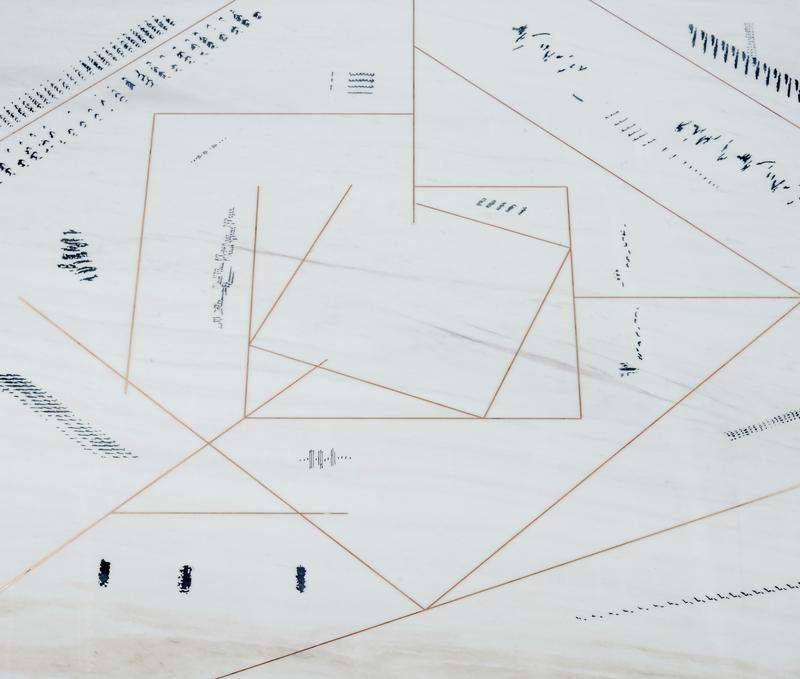
In the passage toward the salons, light installations—chromatic interpretations of a sparrow’s song— accompany the visitor, shifting the experience towards an acoustic and vibratory dimension.
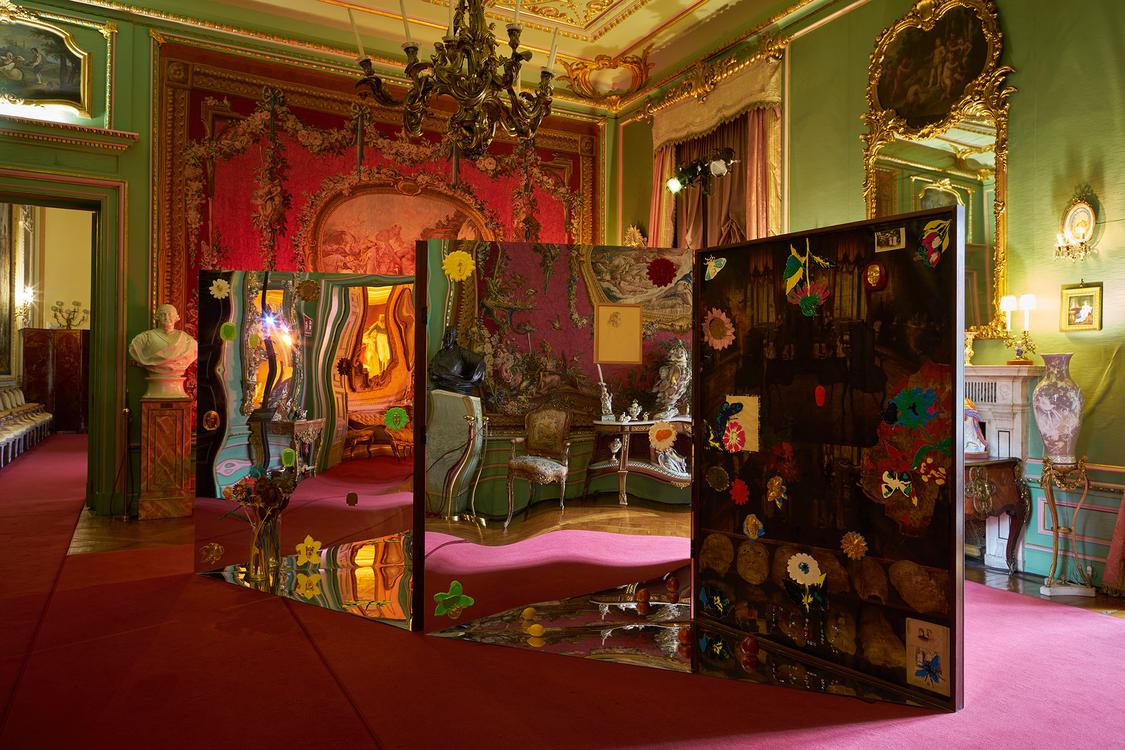
In the salons, the site-specific works from the series El fondo oscuro (The Dark Ground) takes the form of folding screens with distorting mirrors, titled after flowers that bloom in darkness. Through fragmented reflections, layers of transparency, photography, paint and sculpture these pieces destabilize the perception of space and of the viewer’s own body.
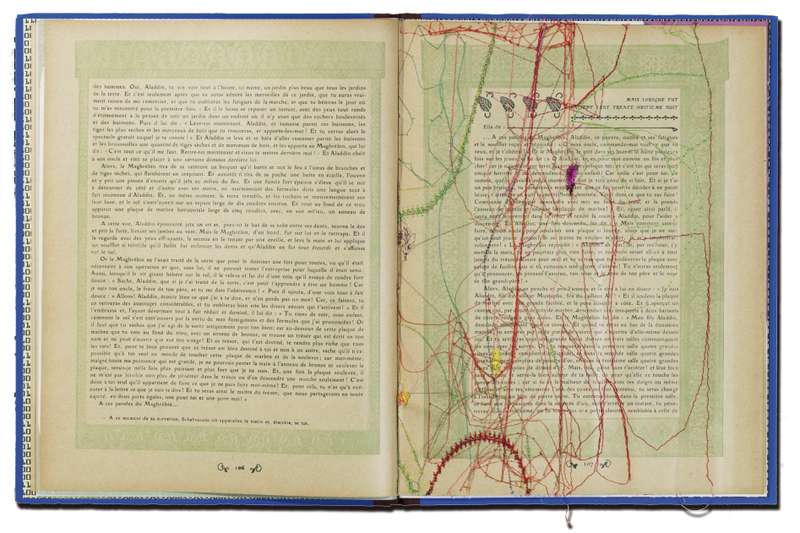
The exhibition culminates in recent works from the series Raconte-toi and The End of the Tale. Drawing on narrative structures as ancient as One Thousand and One Nights, the artist constructs an open-ended story of stories within stories, where eroticism and violence, fragility and desire, magic and everyday life coexist.
A musical composition by J. M. Fernández-Shaw accompanies the exhibition, integrating itself as another layer within this sensitive architecture.
Learn more