Garden as Sculpture: Reframing the Leeum Deck After More Than 20 Years
Since its inauguration in 2004, the Leeum’s outdoor deck has been defined by a succession of monumental, vertical landmarks. Works such as Alexander Calder’s Grand Crinkly (2004–2005), Louise Bourgeois’s Maman (2005–2012), and Anish Kapoor’s Tall Tree and the Eye (2012–2023) established a “monumental axis”, organizing the site through an upward orientation that commanded the viewer’s gaze.
Gabriel Orozco Garden does not extend this lineage – it reconfigures it. Once a static plinth for sculpture, the deck is now a sculpture in itself. It unfolds horizontally as a public environment where architecture, landscape, and shared experience converge – replacing distanced contemplation with physical inhabitation.
As Leeum’s first commissioned garden, the project redefines the deck as public ground – a living environment in which walking, lingering, and the passage of seasonal time constitute the primary medium of the work. In doing so, it opens the museum to its surrounding urban context as a new public garden shaped by use, time, and continual transformation.
Gabriel Orozco: Sculpture in the Everyday, Rules of the Game
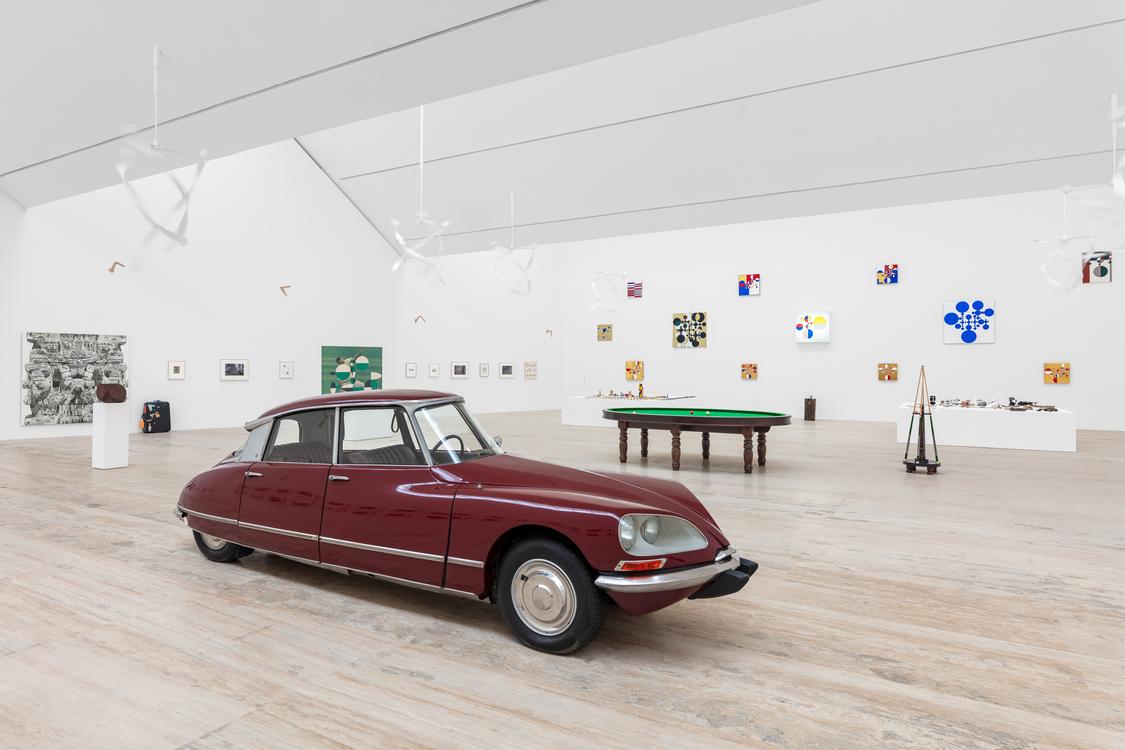
In 1993, Gabriel Orozco presented Empty Shoe Box on the floor at the Venice Biennale and in the same year, produced La DS by longitudinally cutting a Citroën DS and removing its central third. These works marked his arrival on the international stage – not through spectacle, but through its deliberate withdrawal.
Rejecting the conventions of a fixed studio, Orozco moves between Mexico City, New York, Tokyo, and Paris, introducing minimal interventions into found objects and existing situations to reveal the latent structures and unexpected connections within them. His practice resists identification with any single medium; it operates across sculpture, photography, drawing, and installation, governed less by material consistency than by recurring strategies: games, geometric systems, and the interplay of rule and chance.
Art historian Benjamin H. D. Buchloh has situated Orozco’s practice as “sculpture between spectacle and use value”. Where traditional sculpture often risks the fetishization of the object, Orozco counters with the ludic principle – structures of the game that restore utility and activate the viewer as a participant. Gabriel Orozco Garden extends this trajectory into the landscape: sculpture becomes a ground to be walked, and the garden operates as a horizontal field shaped through movement, human presence, and the passage of time.
Completing a Garden Trilogy: London → Mexico City → Seoul
Gabriel Orozco Garden at Leeum marks the third and most comprehensive chapter in the artist’s decade-long engagement with the garden as a sculptural medium. This trajectory began in 2016 at the South London Gallery, where Orozco transformed a neglected site into a permanent garden defined by intersecting geometries. From 2019, he led the master plan for Chapultepec Park in Mexico City – an 800-hectare urban project – culminating in a public sculpture on an urban scale. At Leeum, Orozco builds upon the accumulated insights of these preceding projects.
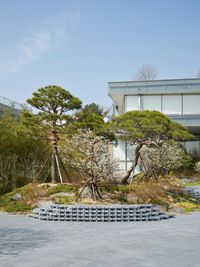
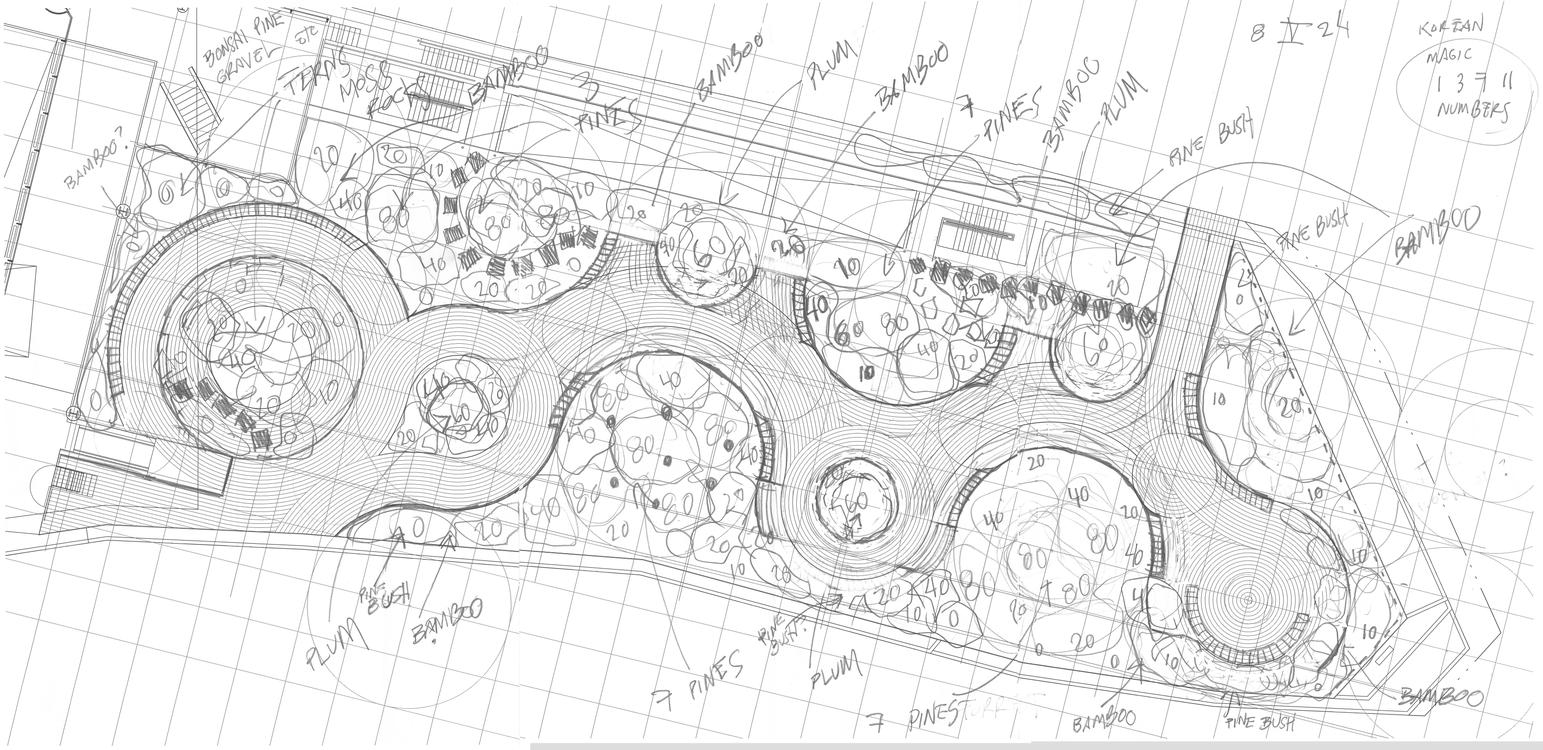
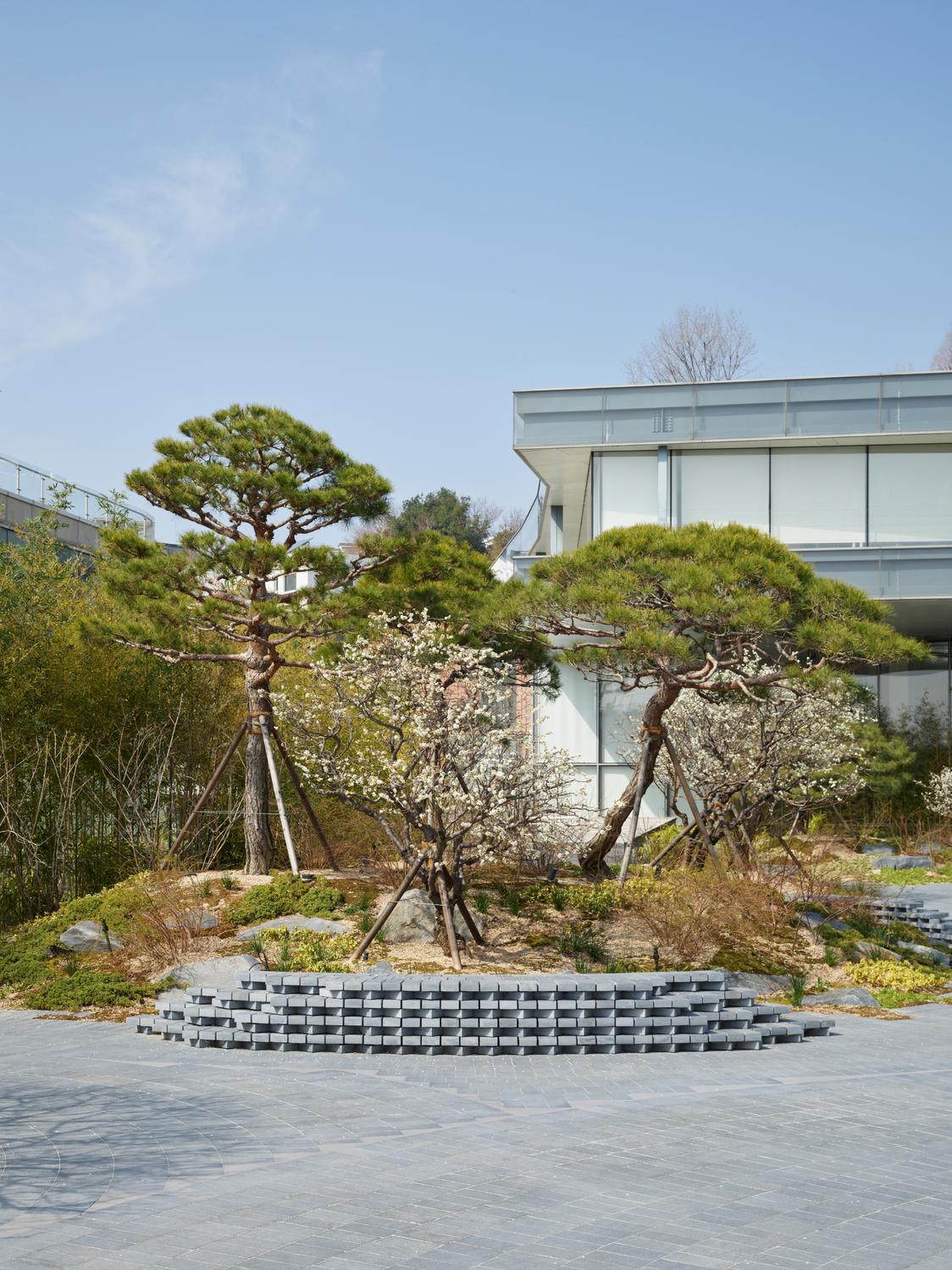
In this garden, Orozco introduces, for the first time in his practice, a conceptual layer drawn from East Asian tradition: the “Three Friends of Winter” (歲寒三友) – pine, bamboo, and plum. These three plants, which sustain the garden through the harshest season with restraint, form both the botanical framework and conceptual backbone of Gabriel Orozco Garden. Here, sustainability takes precedence over flourish, and endurance over spectacle.
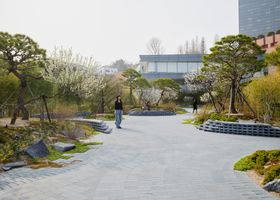
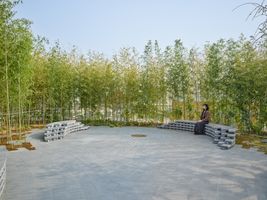
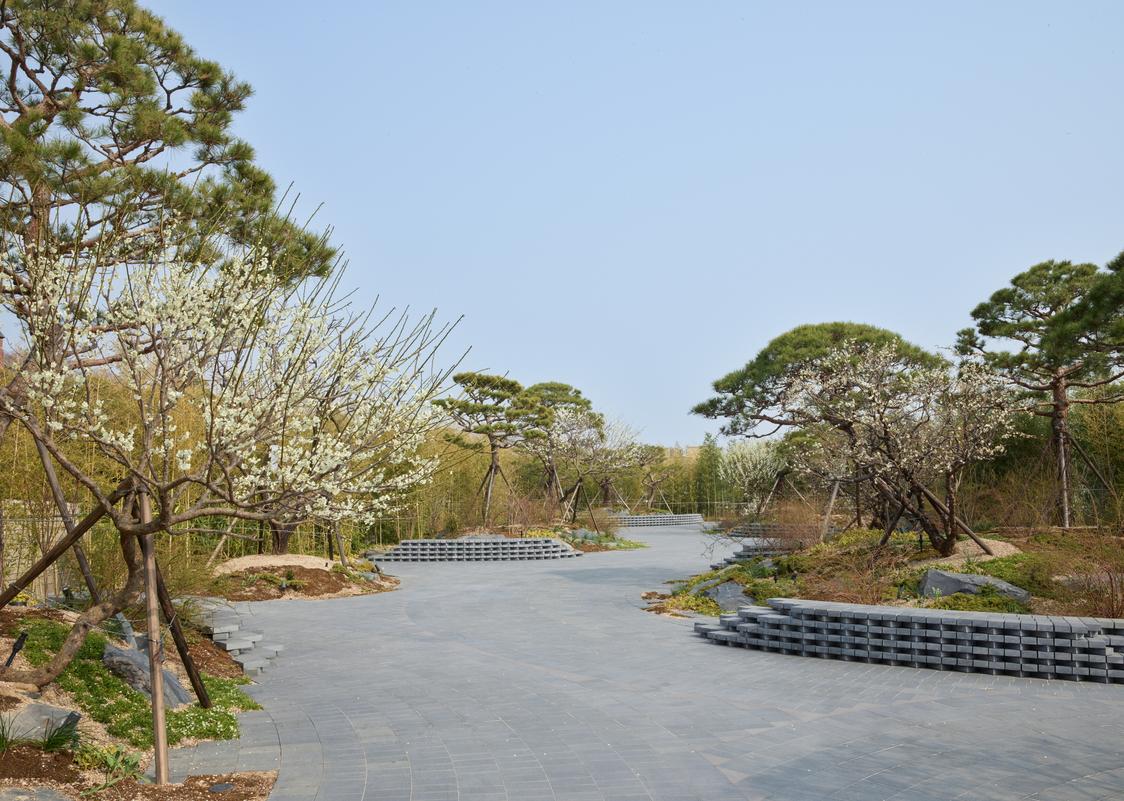
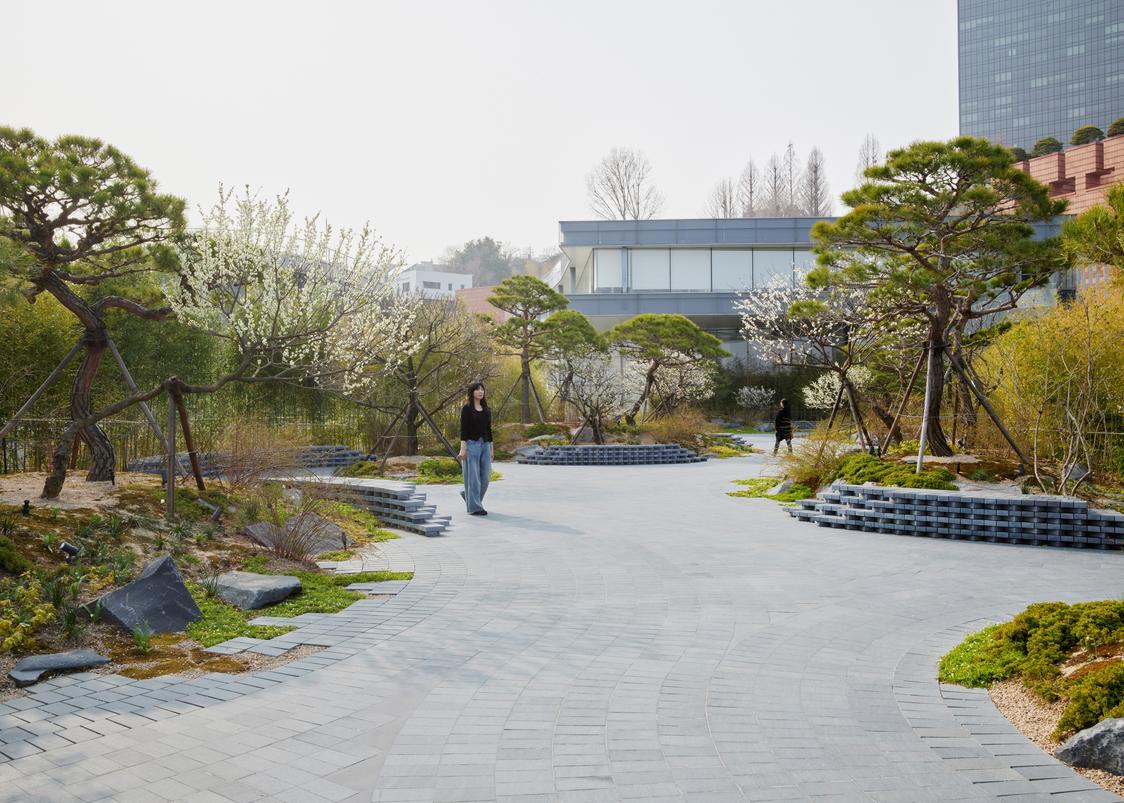
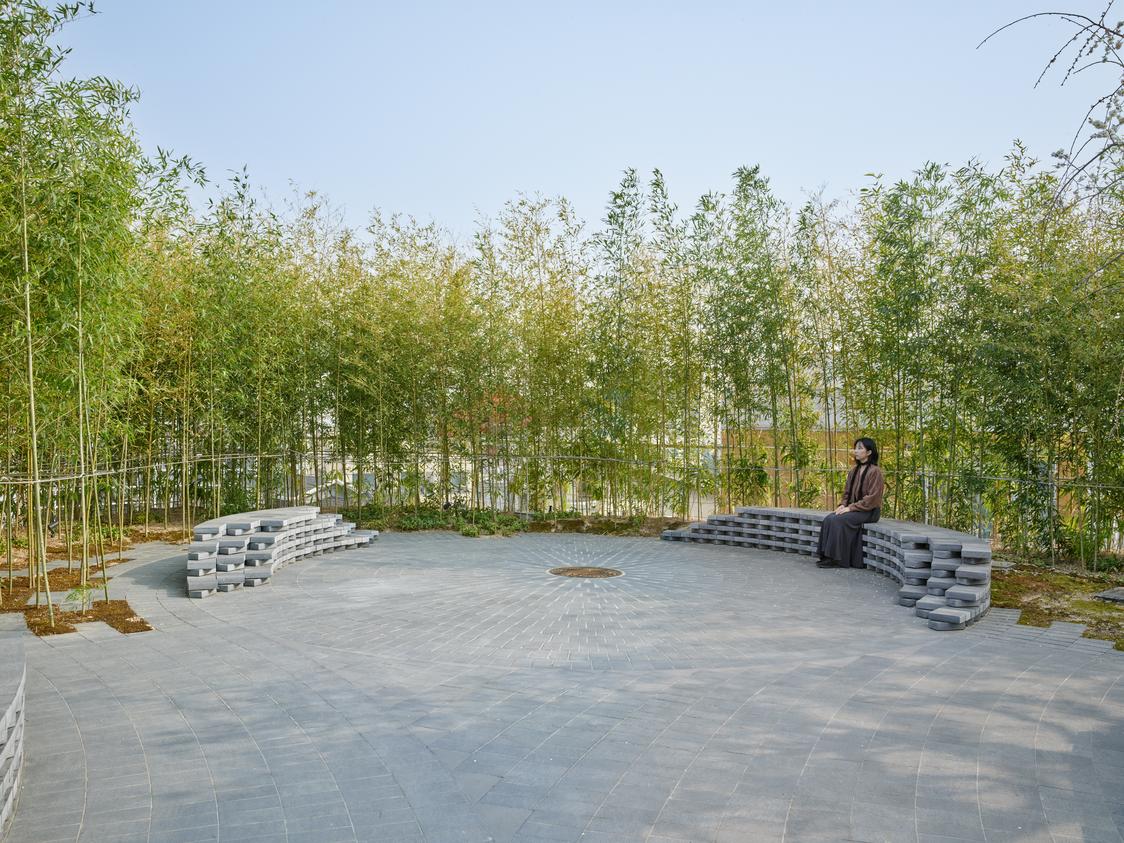
As the term “friends” (友) suggests, the garden is conceived not as a place to be looked up at in isolation, but as a shared public space in which to dwell together. The sculptural impact and value are found in the ways visitors move, linger, and engage with the space. Walking along the circular patterns of the stone paving, resting within the bamboo groves, and observing the plum blossoms as they bloom and fade with the seasons – these moments together constitute a sculptural experience in which landscape operates as a device for organizing time within space.
Space, Materials, and Planting
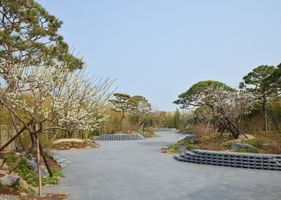
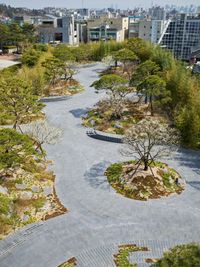
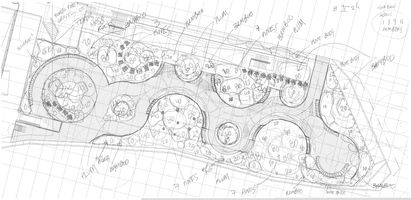
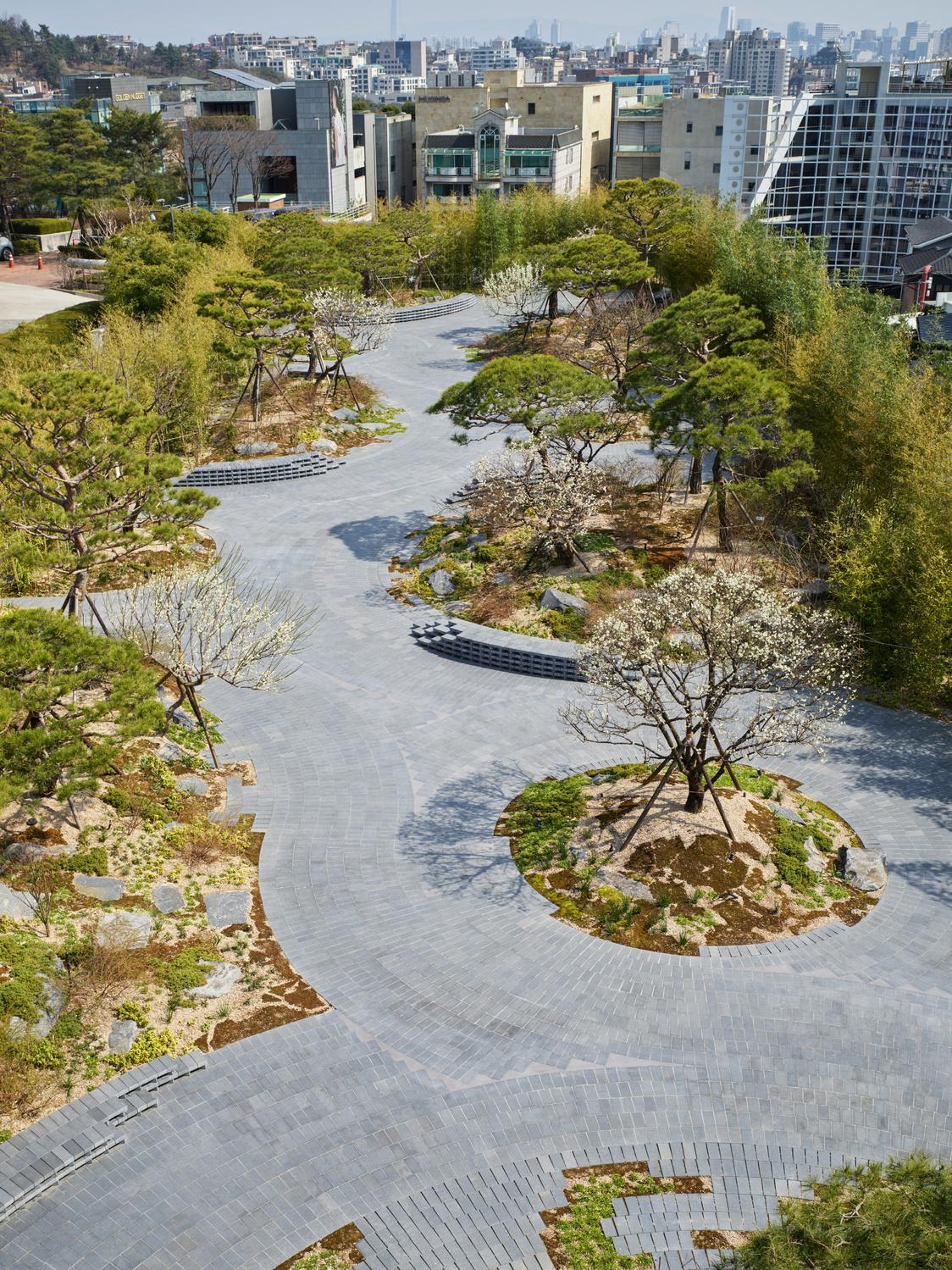
The structure of the garden is based on the motif of circular arrangements that permeates Orozco’s practice. A geometric pattern originating from a single circle expands across the approximately 1,653m² deck, linking circles of varying sizes to form a continuous sequence of interconnected spaces from Plaza 1 through Plaza 10. Each plaza is defined by a distinct combination of paving, pattern, planting, and seating, giving rise to its own atmosphere.
The material palette is deeply rooted in the local context. Custom-cut Boryeong stone, quarried in Boryeong city, Chungcheongnam-do, was laid to form a circular pattern across the deck. The original jarrah wood from the previous deck was repurposed as exterior cladding for the building, extending the project’s material cycle through reuse.
The garden is planted with seventeen pine trees, eleven plum trees, and approximately 1,500 bamboo stalks. The bamboo grove buffers urban noise while forming a more intimate spatial environment within the garden.
Additional plantings—including viburnum, spiraea, parnassia ― establish a restrained palette of predominantly white blossoms. These selections evoke the aesthetic of Sehan (歲寒), a traditional concept representing the noble endurance and integrity maintained during the harshest of winters.
The building’s wood-clad exterior, the circular stone paving, and the surrounding landscape extending toward Namsan Mountain converge to create a singular impression: the deck appears as a garden floating above the city.
plus