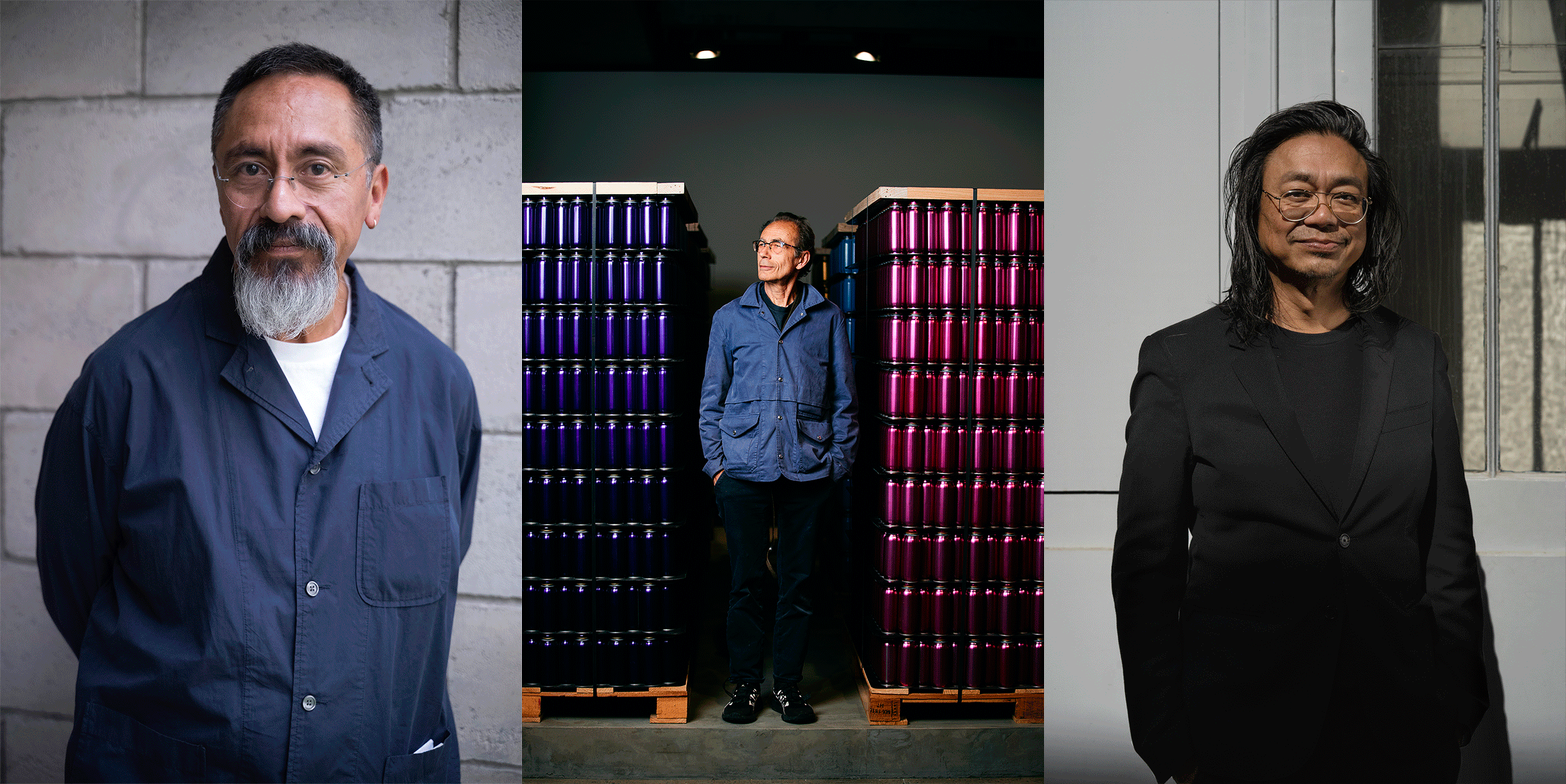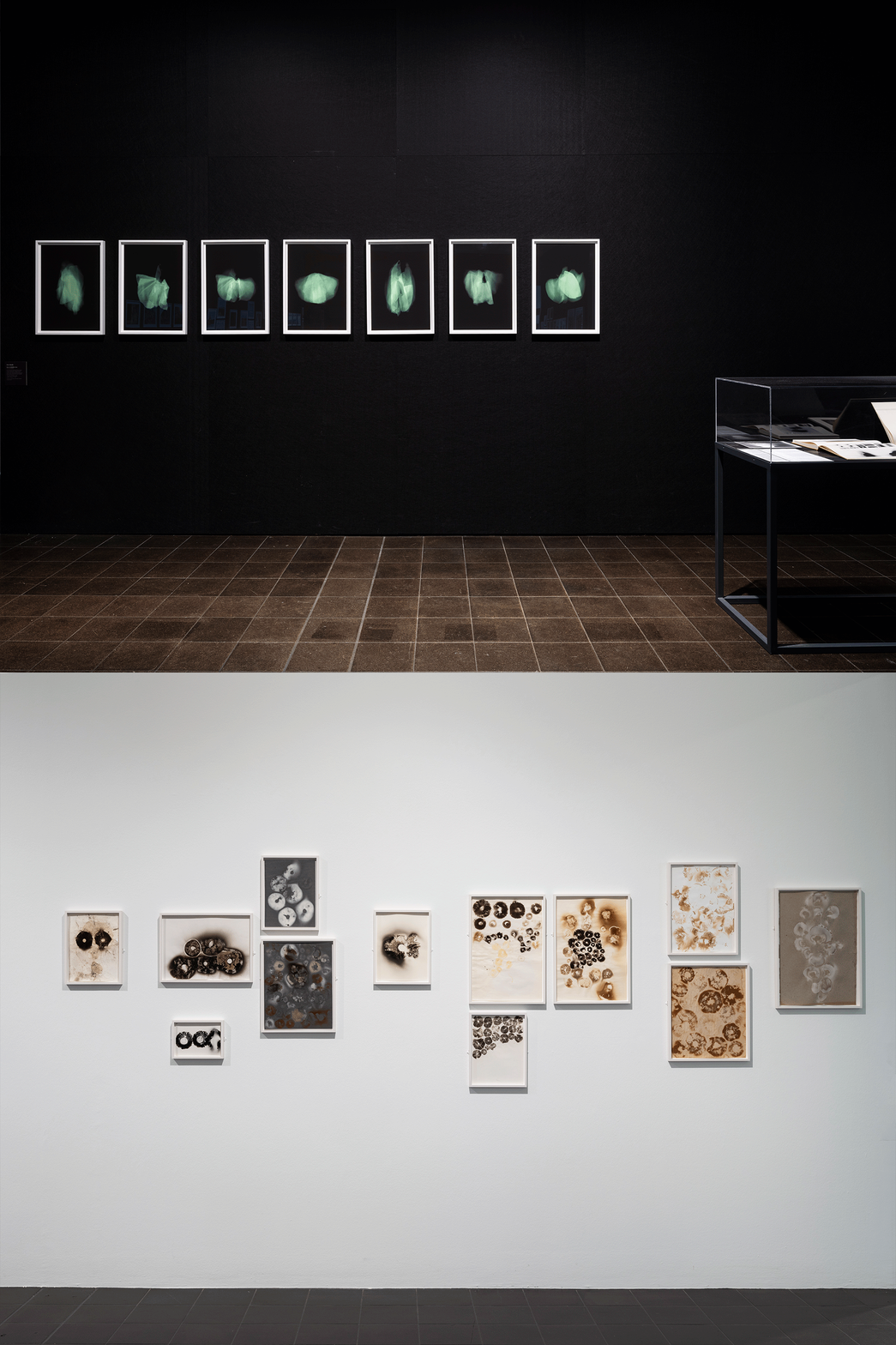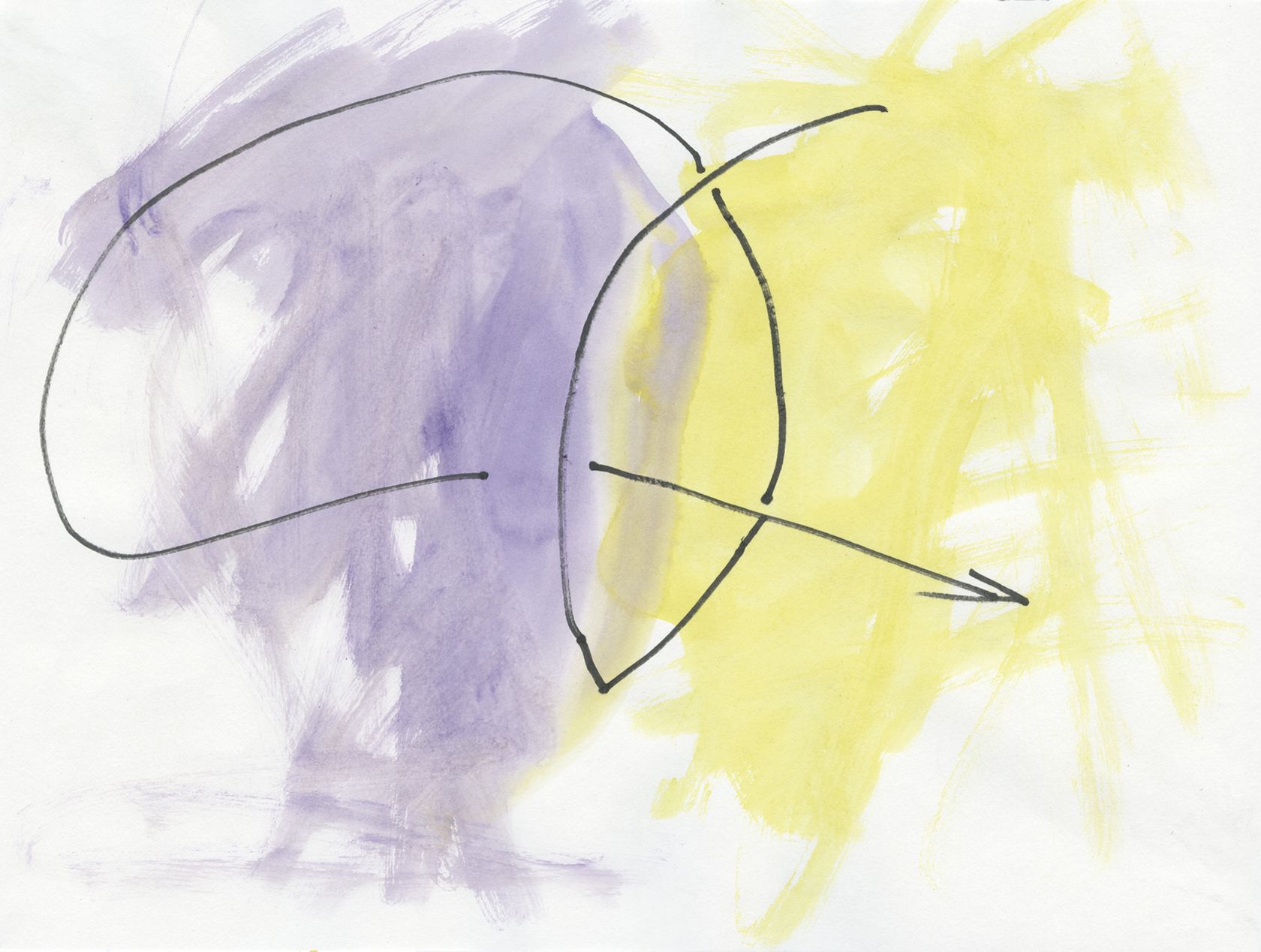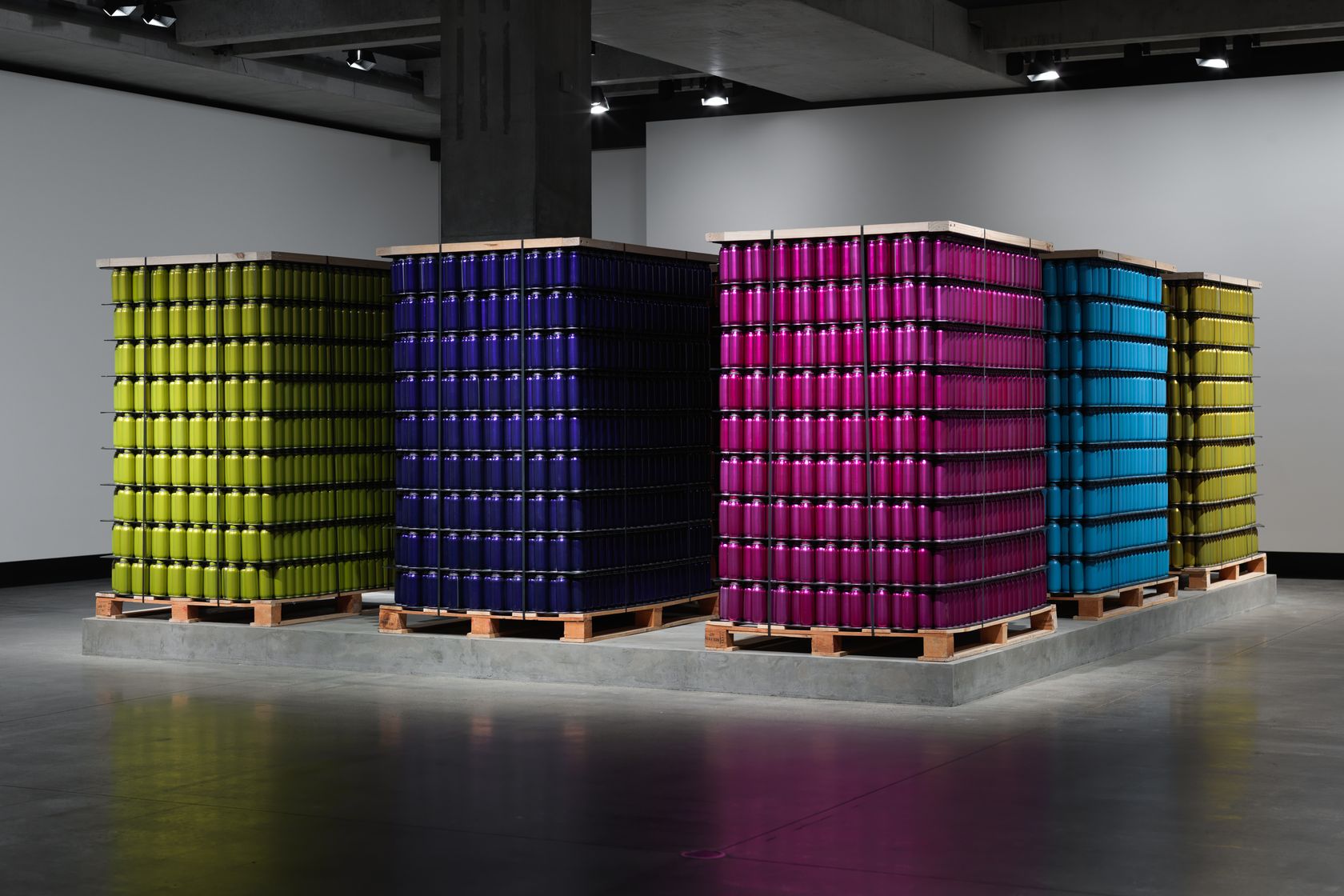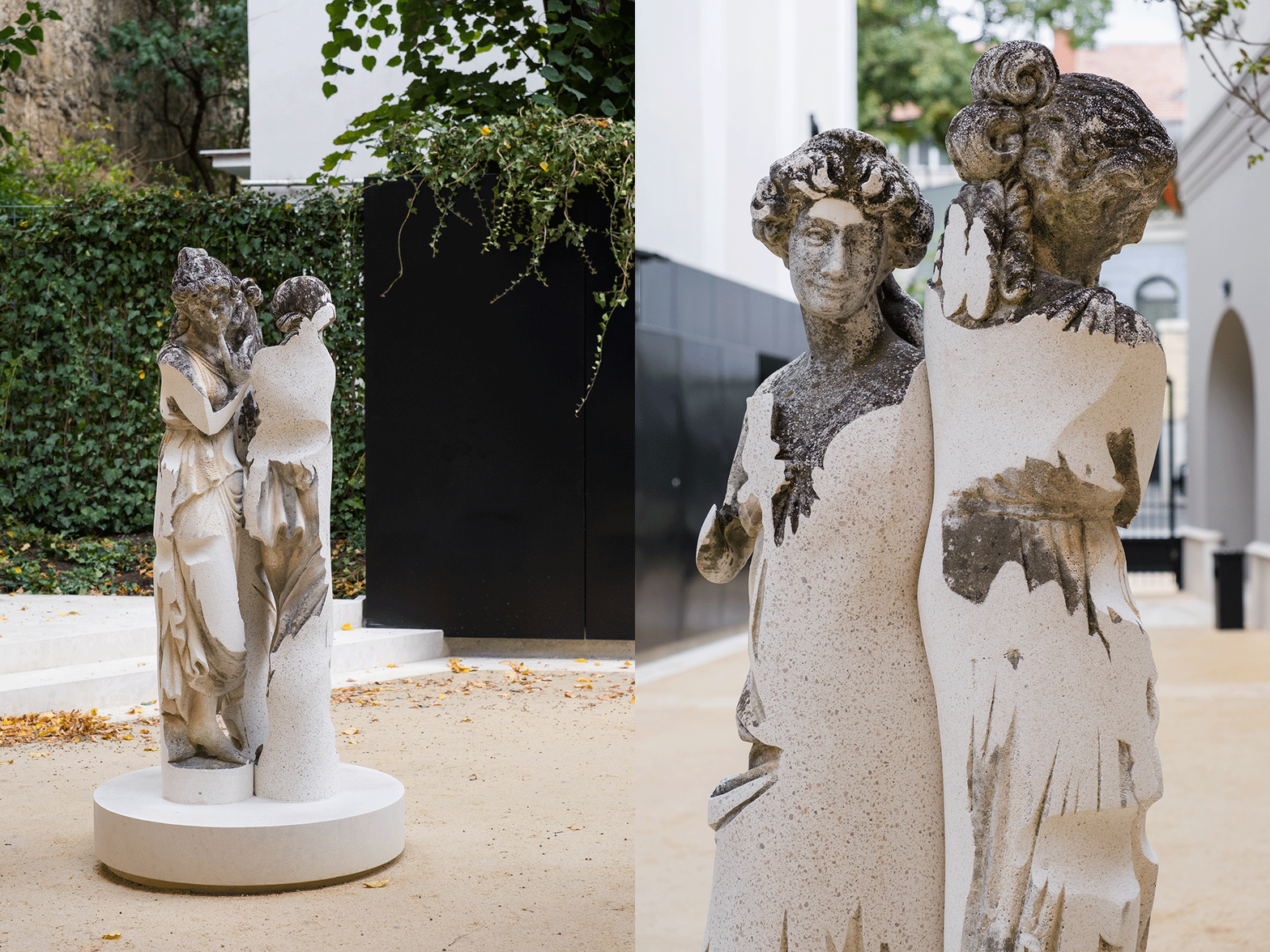
Jean-Luc Moulène in Inauguration, exhibition views, Plan B Foundation, Cluj, Romania (2026). Courtesy of Fundația Plan B, Cluj, Romania (2026). Photos: YAP studio / Mădălin Mărgăritescu. © Jean-Luc Moulène/ADAGP, Paris (2026).
Jean-Luc Moulène participates in the inaugural exhibition of the Plan B Foundation. Bringing together works that activate, in a spatial or symbolic sense, different layers or parts of the building, or that themselves inaugurate a language, a metaphorical relationship, or the scenario of a beginning, the exhibition creates pathways that reinvest the new space with meanings, gestures, and possibilities.
Jean-Luc Moulène presents several works including a new sculptural assemblage titled Three Graces (Paris-Cluj) (2026). Created for the courtyard pits, it consists of three concrete garden sculptures leaning against another, in a process of reciprocal erosion. Rotating around their own axes and gradually drawn closer to each other, the three figures enter a relationship whose tensions and resolution, beginning and end, as well as its shifting balance between attrition and consolidation, can never be fully determined. The work interrogates and updates the iconography of The Three Graces—Aglaia, Euphrosyne, and Thalia, whose names translate roughly as Radiance, Joy, and Flowering—one of the most frequently reimagined motifs in Western art, and one of its most semantically unstable. The Three Graces are companions to Aphrodite, handmaidens to the Muses, or personifications of the generosity through which social life acquires its grace. The canonical composition—two figures facing the viewer, one turned away, their arms interwoven in a chain of reciprocal gesture—derives from Hellenistic sculpture. Its formal ingenuity lies in presenting the female body from multiple angles simultaneously, satisfying the sculptor’s interest in the figure in the round while also serving the painter’s need to generate movement within the otherwise static grouping. The interlacing of arms figures the social bonds the Graces represent—the circulation of gifts, graces, and obligations. One gives, one receives, and one returns; the chain must remain unbroken for the gift to retain its virtue. This logic is reflected in the way the three figures have so often appeared in their iconographic history as a single woman seen from different angles. Moulène does here the opposite. He sets the sculpture within an ongoing process of erosion, in which each statue chips away at the other two and leaves its own imprint on them. As the process continues, some of the particularities of the initial figures disappear, along with the rather conventional metaphors of fertility that they carried. If, throughout the history of the motif, a single idealized portrait is refracted into three different persons, here three separate presences are bound together in a point of indistinction, halfway between their former autonomy and their destruction, at a point of equal violence and tenderness. Each figure becomes the ground on which the other two take shape.
Other works in the selection reveal Moulène’s understanding of the body as an interweaving of organs, rituals, and abstractions: bones that repair holes in objects, innards morphed into ceremonial architecture, lacunae both filled and delineated. These are signs and symptoms of a disjointed body struggling to regain its metabolic order, its composition.
Learn more